
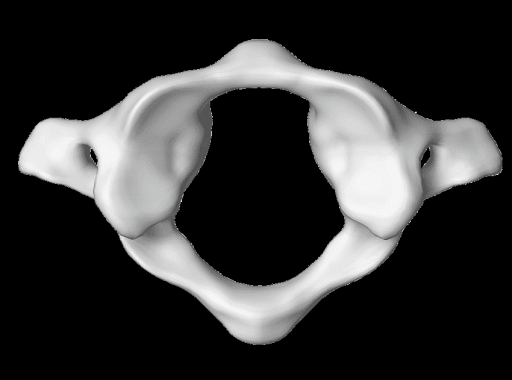
Your atlas is the top bone in your neck, and it plays a major role in protecting your brain-stem and supporting your head. This small but powerful bone holds up the weight of your skull and allows for smooth head movement. Because of its unique position at the top of the spine, even a slight misalignment can have wide-reaching effects on your body.
Many people live with symptoms for years without realizing that atlas misalignment may be contributing to their discomfort. Understanding the causes and signs of this condition can help you determine whether a precise upper cervical evaluation may be the right next step.
What Is the Atlas and Why Is It So Important?
The atlas is the first cervical vertebra, also known as C1. It sits directly beneath the skull and surrounds the brain-stem. The brain-stem is responsible for many vital functions, including balance, coordination, breathing, heart rate, and communication between the brain and body.
Because the atlas protects this critical area, proper alignment is essential for healthy nervous system function. Unlike other vertebrae, the atlas does not have a disc above it. This design allows for flexibility but also makes it more vulnerable to shifting out of position.
When the atlas is properly aligned, the head sits balanced on top of the spine. When it becomes misaligned, it can create tension and imbalance throughout the body.
Common Causes of Atlas Misalignment
Atlas misalignment can happen suddenly or develop gradually over time. Some of the most common causes include:
Car accidents, especially whiplash injuries
Sports-related impacts
Slip and fall accidents
Childhood falls
Repetitive strain
Poor posture over time
Even something as simple as spending years looking down at a phone or computer can contribute to strain in the upper cervical spine. Over time, these small stresses may lead to a shift in alignment.
Because the atlas supports the head, which weighs 10 to 12 pounds, even a small misalignment can increase pressure on muscles, ligaments, and nerves.
Signs and Symptoms of Atlas Misalignment
Symptoms of atlas misalignment are not always obvious. In some cases, people assume their discomfort is simply part of aging or daily stress. However, the underlying cause may be structural.
Common signs may include:
Frequent headaches
Neck pain or stiffness
Dizziness or balance problems
Uneven shoulders or hips
Chronic muscle tension
Reduced range of motion
Fatigue
When the head is not sitting evenly on the spine, the body often compensates. This can lead to postural imbalances, muscle tightness, and uneven weight distribution. Over time, these compensations may contribute to ongoing discomfort.
Because the brain-stem is located in this area, irritation or pressure caused by misalignment may also influence nervous system function. This is why some patients report symptoms that seem unrelated to the neck at first.
Why Symptoms Are Often Overlooked
One of the challenges with atlas misalignment is that symptoms can develop slowly. A person may not connect recurring headaches or mild dizziness with a structural issue in the upper neck.
Additionally, pain is not always present at the site of the problem. For example, a misaligned atlas may contribute to shoulder tension or lower back discomfort due to compensation patterns in the spine.
Since symptoms can vary widely from person to person, it is important to look beyond surface-level discomfort and consider overall alignment and posture.
The Importance of a Precise Upper Cervical Evaluation
Because the atlas plays such a critical role in protecting the brain-stem and supporting the head, evaluation must be precise. Upper cervical care focuses specifically on the alignment of the atlas and axis (C1 and C2 vertebrae).
A detailed assessment may include:
Postural analysis
Leg length checks
Gentle physical examination
Advanced imaging when necessary
This careful approach helps determine whether atlas misalignment is contributing to your symptoms. Unlike generalized spinal adjustments, upper cervical care focuses on small, specific corrections tailored to each individual.
A Gentle, Targeted Approach to Correction
Upper cervical chiropractic care is known for being gentle and precise. There is no forceful twisting or cracking of the neck. Instead, adjustments are carefully calculated to restore proper alignment with minimal force.
The goal is not repeated manipulation, but long-term stability. When the atlas is realigned, the head and spine can return to a more balanced position. This may reduce tension on muscles and improve overall nervous system communication.
Many patients report improvements in posture, reduced headache frequency, better balance, and less chronic tension after correction. While results vary, restoring structural alignment can create a stronger foundation for overall health.
Is Atlas Misalignment Affecting Your Health?
If you experience chronic headaches, neck pain, dizziness, or uneven posture, it may be worth considering whether atlas misalignment is playing a role. Because symptoms are not always obvious, many people do not realize alignment is the root issue.
At Atlas Chiropractic, the focus is on precise upper cervical evaluations and gentle corrections designed to support proper nervous system function. By addressing alignment at the top of the spine, patients may experience meaningful improvements in comfort, balance, and overall well-being.
Your atlas may be small, but its impact on your health is significant. Understanding its role and seeking a thorough evaluation could be an important step toward lasting relief and improved quality of life.