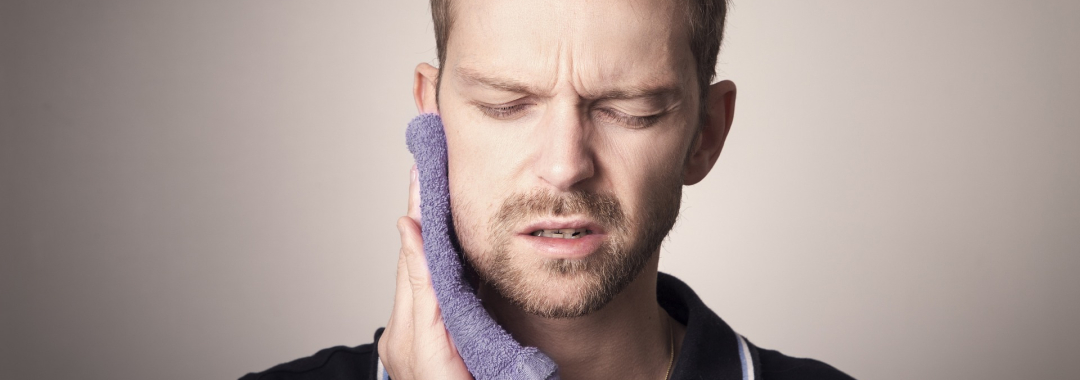
You have worn the night guard, cut back on gum and tried to stop clenching at your desk, and the jaw still clicks and aches. When jaw pain keeps returning despite dental care, the position of your head on your upper neck is worth checking. The jaw hangs from the skull, and the skull balances on the top vertebra of the neck, so a head that sits off level changes how the two jaw joints meet. Patients at Atlas Chiropractic in Fort Wayne often describe jaw tension that started around the same time as neck stiffness or headaches. That timing is a clue.
What is a TMJ disorder?
The temporomandibular joint, or TMJ, is the hinge in front of each ear where the lower jaw meets the skull. A temporomandibular disorder, or TMD, is pain or dysfunction in those joints or the chewing muscles around them.
The National Institute of Dental and Craniofacial Research (NIDCR) puts the prevalence of TMJ disorders between 5% and 12%, at least twice as common in women as in men. Symptoms include aching in front of the ear, pain while chewing, temple headaches, a jaw that catches, and clicking or grinding. NIDCR notes that research does not support the belief that a bad bite or past braces cause TMD.
Why would your neck affect your jaw?
The jaw and upper neck work as one system. They share muscles, they share nerve pathways in the brainstem, and the position of the head on the neck changes where the lower jaw rests when your mouth is relaxed.
Tilt your head back and your teeth part slightly. Drop your chin and they press together. When the atlas, the top vertebra of the neck, sits a few degrees off level, the chewing muscles on one side work harder to keep the bite even. Over months that can show up as clenching, a sore muscle in front of the ear and a joint that clicks on one side.
The nerve wiring matters too. Sensory fibers from the upper neck and the trigeminal nerve, which supplies the jaw and face, meet in the same region of the brainstem. Irritation at the top of the neck can be felt as jaw or temple pain.
Research supports looking at both. A 2016 study by von Piekartz and colleagues found that people with more jaw pain and dysfunction also showed more upper neck impairment, and the authors recommended examining the cervical spine in TMD patients. A 2020 systematic review and meta-analysis reported a clinically relevant link between neck disability and jaw disability.
What signs suggest the neck is involved?
Jaw symptoms that travel with neck symptoms are the main clue. A few patterns come up often:
- Jaw pain and neck stiffness that started around the same time, often after a fall, whiplash or long dental work
- Clicking or soreness on one side only, with neck tightness on that same side
- Jaw tension that worsens after hours at a screen and eases when you move
- Headaches at the base of the skull alongside temple or jaw pain
One item alone means little. Several together are worth measuring.
Is jaw clicking without pain a problem?
Usually not. NIDCR states that jaw sounds without pain are common and do not need treatment, and that many TMD symptoms resolve on their own. It recommends conservative, reversible care and advises against treatments that permanently change the teeth or bite.
See a dentist or physician first if your jaw locks open or closed, you cannot open wide enough to fit two fingers between your teeth, your bite suddenly changes, or jaw pain comes with swelling, fever, ear drainage or numbness in the face. Jaw pain with chest pressure or shortness of breath needs emergency care, since it can signal a heart problem.
How does Atlas Chiropractic evaluate jaw pain?
Atlas Chiropractic looks at whether the head is sitting level on the neck, and works alongside your dentist rather than replacing them. The NUCCA protocol, from the National Upper Cervical Chiropractic Association, uses precision imaging to measure atlas position in degrees, plus a supine leg check and postural measurements that can be repeated each visit.
The correction is a light, sustained contact behind the ear with no twisting or popping, and the jaw itself is not adjusted. Follow-up imaging confirms whether the measurement changed. Many patients keep using their night guard while the neck is addressed.
Getting your jaw and neck checked in Fort Wayne
A jaw that keeps clicking and aching despite good dental care may be compensating for a head that does not sit level. If your jaw pain arrives with neck stiffness or headaches, Atlas Chiropractic can measure your upper neck and tell you whether it is part of the problem. Reach out through the site to book a consultation. This page is educational and does not replace evaluation by your dentist or physician.